Vines sits among working rows of grapes at Coldstream, with a glass-sided pavilion that opens the whole reception up to the vineyard outside. This is what a day there is actually like, and what it takes to photograph one well.
What sets Vines apart from a lot of Yarra Valley venues is how much glass is involved. The reception pavilion runs floor-to-ceiling on multiple sides, which means the vineyard is never out of sight — even mid-reception, even after dark, once the string lighting takes over. That single fact shapes almost every photographic decision on the day.
Working rows of vines run out from the buildings in every direction, and they are the single best backdrop on the property for portraits. Late in the afternoon the light runs straight down the rows rather than across them, which is the difference between a flat backdrop and one with real depth.
Inside, a stone-walled space with warm pendant lighting hung low from a timber ceiling — the kind of room that photographs beautifully after dark without needing much help. It's a strong contrast to the glass pavilion: closer, warmer, and a good option for speeches when you want the room's attention rather than the view competing for it.
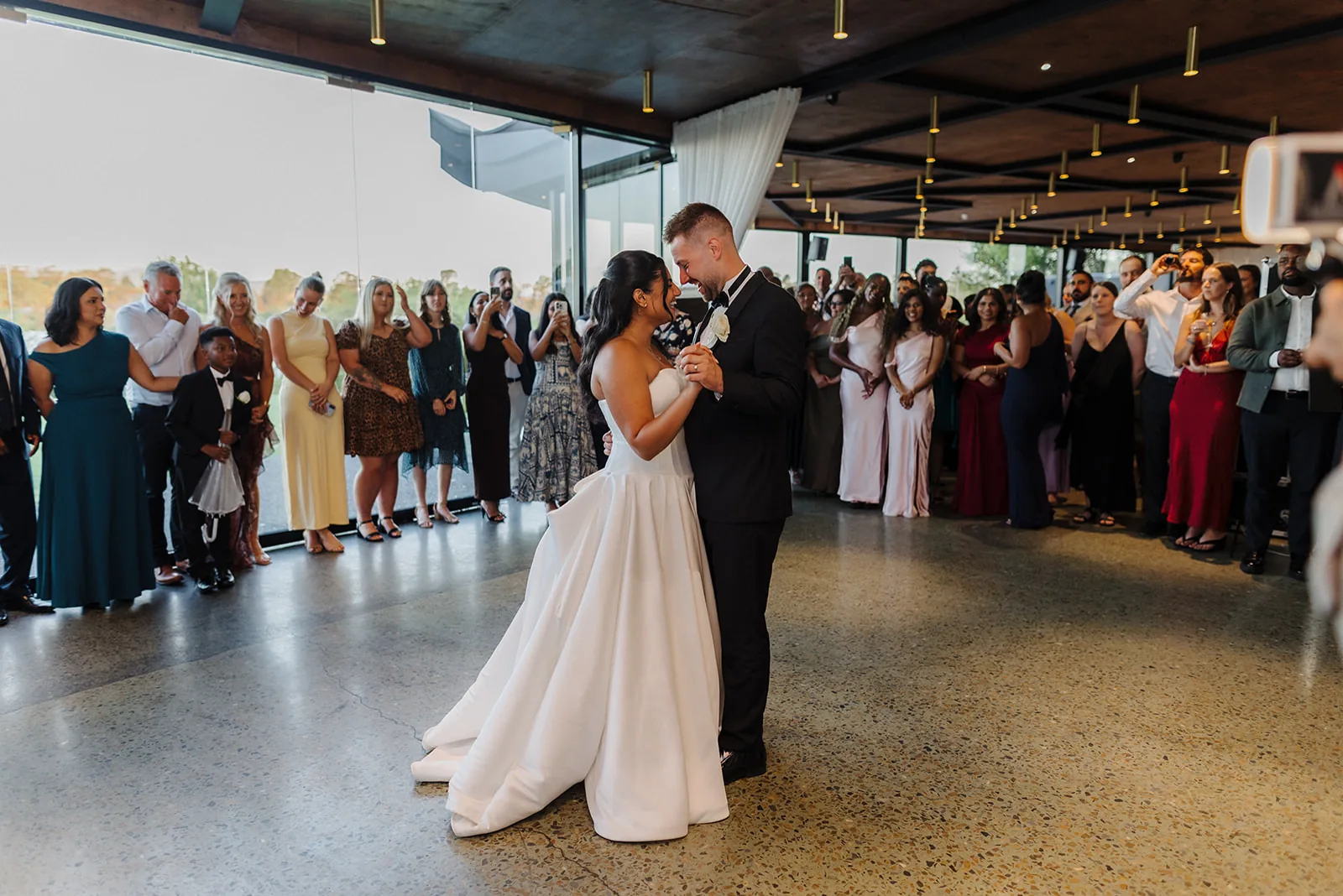
The main reception space, walled in glass on multiple sides with the vineyard visible from almost every seat. In daylight it reads as bright and open; once the sun drops it becomes something else entirely, holding the last colour in the sky behind the dance floor for longer than a closed room ever could.
Open grass framed by trees, used for group photos and the quieter part of the afternoon. It's unremarkable in the best way — a clean, uncluttered space that doesn't compete with the dress or the light.
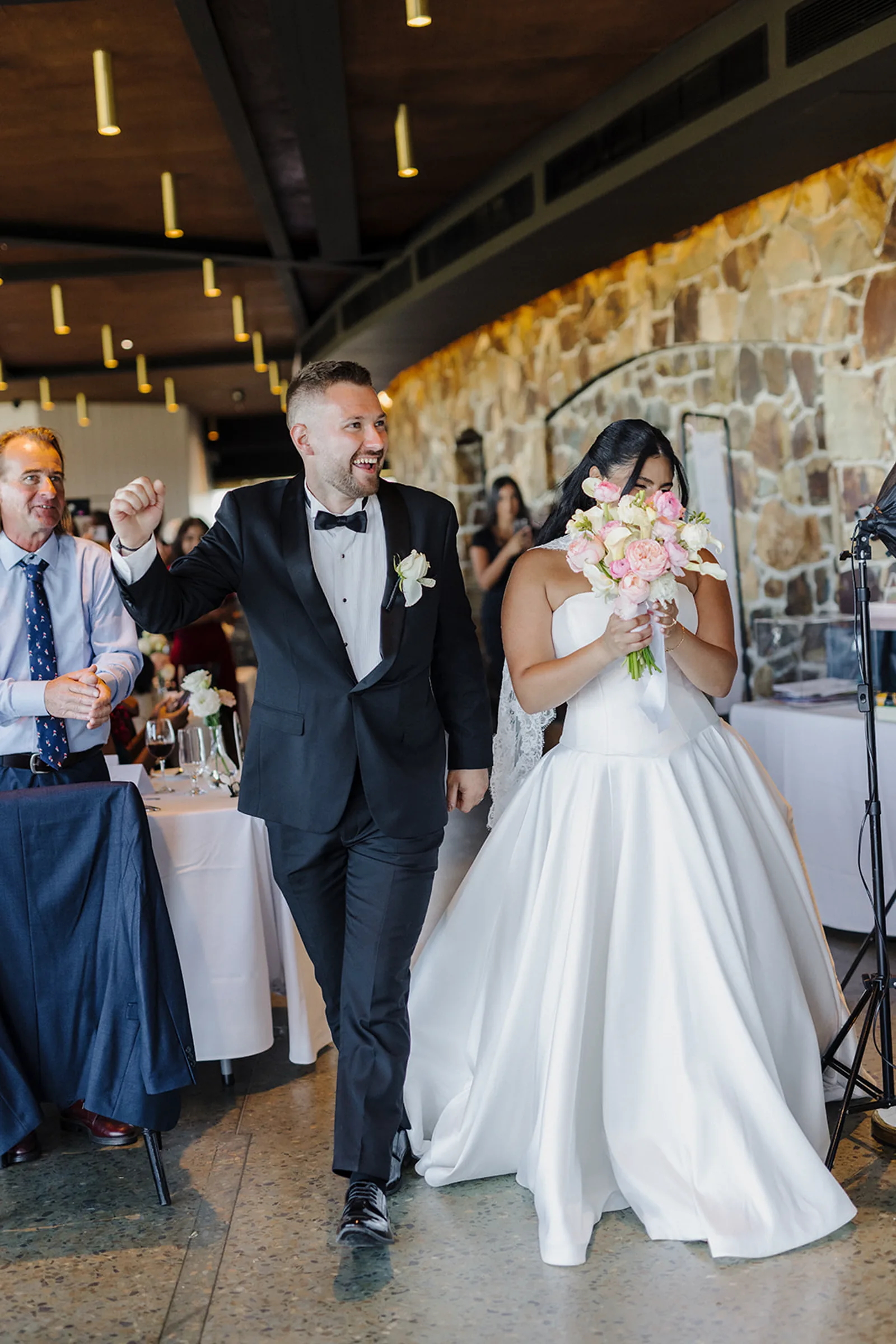
A wedding at Vines, from the reception entrance under the stone wall through to the first dance with the whole pavilion — and the vineyard — behind them.


The entrance shot shows exactly what the sandstone room gives you — warmth, texture, and pendant lighting that does most of the work after dark. The first dance is the pavilion at its best: guests ringed around the floor, glass on both sides, the vineyard and the last of the evening light still visible outside. Between the two, it's a good sense of how differently the two reception spaces read on camera.
The pavilion is the venue's biggest asset and the thing most worth planning around.
Time the reception start around sunset, not the ceremony. The pavilion is at its most dramatic in the twenty minutes either side of the sun going down, when the glass holds colour instead of just reflecting the room's own lighting back. If canapés or speeches can flex, put them either side of that window rather than through it.
Use the vineyard rows before the light gets hard. Straight rows of vines look best with low, raking light — late afternoon rather than midday. If your ceremony is early, plan a short return trip to the vines for portraits later, rather than doing everything back-to-back.
Don't discount the sandstone room for photos. Couples sometimes treat it as a fallback to the pavilion, but it photographs just as well and gives you a genuinely different mood on the day — worth a deliberate few minutes rather than passing through it once.
There are guides to Stones of the Yarra Valley, Bramleigh Estate, Quat Quatta, Chateau Dore, The Farm Yarra Valley, The Lakehouse, Overnewton Castle and wedding venues in Berwick, plus full galleries from weddings across Melbourne and the Yarra Valley.
All venue guides See selected weddingsSend me your date and I'll come back with availability and a price list within two business days.
Check your date